
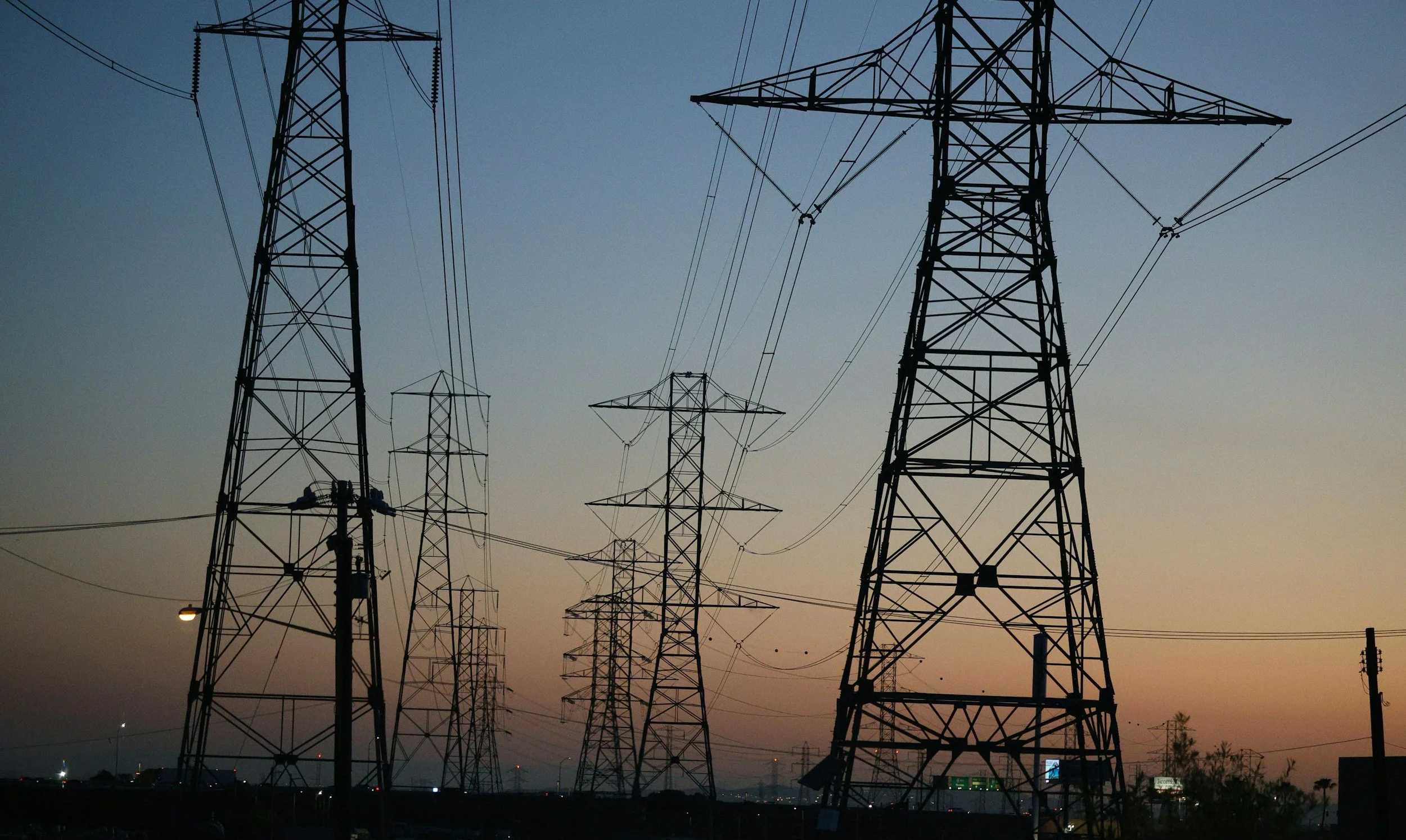
New Jersey households are experiencing some of the sharpest electricity cost increases in years. In 2025, bills rose nearly 20%, adding $250–$350 to many New Jersey families’ annual electricity bill. This increase stems from several factors: an aging power grid, demand growth from AI data centers, fuel price volatility, and weather driven grid stress.
The war in Iran is now shocking global oil and natural gas markets driving gas and electricity prices even higher.
Residents feel powerless: they can’t influence global fuel markets or infrastructure decisions. But municipalities can step in with a solution that delivers immediate savings and addresses the underlying cause of rising costs.
What’s Driving the Crisis
Surge in Data Center Demand
Artificial intelligence and cloud services are fueling a rapid buildout of large, round‑the‑clock data centers. These facilities already use 5% of U.S. electricity, with federal projections showing consumption could more than double by 2028.
PJM, New Jersey’s grid operator, warns that most projected load growth through 2030 now comes from data centers, contributing to rate spikes statewide. New large data centers, like those in Vineland and Kenilworth, helped drive the rate jump in 2025.
Supply Lag: A National and New Jersey Problem
Across the U.S., data centers are coming online faster than new power plants can be built and interconnected, leaving grids struggling to keep up with soaring demand.
New Jersey faces the same challenge: PJM reports project backlogs, delayed generation additions, and generator retirements are tightening supply, contributing to price spikes and raising long‑term reliability concerns.
Market Forces Outside Residents’ Control
A large portion of New Jersey electric bills reflects wholesale supply and grid capacity charges—costs that fluctuate due to regional market conditions, not household consumption.
Community-Scale Resources Are the Scalable, Cost‑Lowering Alternative
As demand surges and supply lags, everyone pays more. However, the market is adapting to crisis conditions, and New Jersey municipalities are now key drivers of grid modernization and consumer protections.
The U.S. is adding new power capacity primarily from clean energy because it is cheaper and faster to build than fossil generation. In 2025, 90% of all new national electricity capacity came from renewable sources. And nearly all new generation added to the grid in New Jersey in the past five years has been solar. New fossil fuel generation is simply too expensive, takes too long to permit and build, and relies on volatile fuel markets.
Renewable generation helps stabilize bills by reducing exposure to fossil fuel prices and relieving pressure during peak demand – when electricity is most expensive.
New Jersey’s Answer: Community Solar
New Jersey has established one of the strongest Community Solar programs in the country. It provides bill credit discounts for participants, prioritizing low‑ and moderate‑income (LMI) customers. Savings are guaranteed and appear directly on residents’ normal utility bill.
Unlike conventional large-scale wholesale power generation, Community Solar farms are built on available rooftops and brownfields, each serving hundreds of local utility customers through a subscription model. Community Solar requires no rooftop installation and is accessible to renters, seniors, and residents of multifamily buildings. More than 50 community solar projects have already been installed in PSE&G, with more than 225 in the development pipeline set to be built in the next two years.
A Transformative, Inclusive Affordability Tool
As of 2025, the Board of Public Utilities has authorized New Jersey municipalities to directly address energy affordability by broadening access to solar savings through municipal automatic enrollment (MAE) in Community Solar. Municipalities designate eligible groups of residents, such as neighborhoods or multifamily buildings, to automatically receive on-bill solar credits that lower their utility costs. At least 80% of the selected group will be low- to moderate-income (LMI), ensuring savings reach the households most burdened by high energy costs. Residents receive advance notice and can opt out or cancel anytime with no penalty.
MAE transforms Community Solar into a broad, inclusive affordability tool that focuses value in your community. With seamless on‑bill credits and guaranteed discounts, households experience immediate relief.
Many New Jersey municipalities, including Hoboken, Princeton, Camden, Highland Park, Manchester, Collingswood, and others are in the process of establishing a MAE Community Solar program.
Glenn Weinberg, Vice President, at Joule Community Power, which launched the country’s first MAE Community Solar program in 2021, emphasizes just how transformative this model can be for New Jersey communities. He calls it “the most impactful step municipal leaders can take to address energy affordability,” noting: “It’s exceedingly rare to see a program that so directly addresses residents’ energy cost‑burdens and simultaneously accelerates the much-needed development of new generation resources.”
Sustainable Jersey’s 2025 Municipal Community Solar Automatic Enrollment Guide provides a clear, step‑by‑step blueprint for towns to adopt the program without administrative strain.
Why MAE Community Solar is the Right Solution Now
Immediate Relief
Community Solar reduces monthly bills through guaranteed credits on utility statements.
Long‑Term Stability
Expanding solar generation reduces the cost pressures caused by rising data‑center load and volatile fossil fuel markets.
Equity
MAE prioritizes LMI households and reaches residents who otherwise may never sign up.
A Ready‑to‑Use Program
The policy framework, billing systems, and guidance materials are already in place; municipalities simply need to take advantage of available tools.
Take the First Step
New Jersey’s energy affordability crisis is being driven by massive structural forces—wholesale market costs and soaring data‑center energy demand—that residents cannot control. But municipalities can deliver meaningful relief.
Automatic enrollment in Community Solar is the most powerful, immediately available tool New Jersey offers to protect households from rising energy bills.
By embracing MAE now, municipal leaders can lower costs for residents, support clean energy growth, and shield their communities from the next wave of market and data‑center‑driven price increases.
Reach out to Joule Community Power at gweinberg@jouleassets.com to schedule a meeting for your municipality to learn more about MAE Community Solar and how to get started.
About Joule Community Power
Joule Community Power helps communities and consumers lower their energy costs. We specialize in consumer protective tools that reduce bills, stabilize rates, and expand access for consumers historically left out of energy markets. Joule empowers households, businesses, and municipalities to benefit from the same market leverage typically reserved for large corporations.
Joule scales practical solutions that address the energy affordability crisis at its source. We work alongside municipal and state governments, corporations, and community stakeholders to unlock capital for project development, energy efficiency and grid resilience. The result a cleaner, more just energy system, where cost savings, reliability, and long-term stability are accessible to all.