
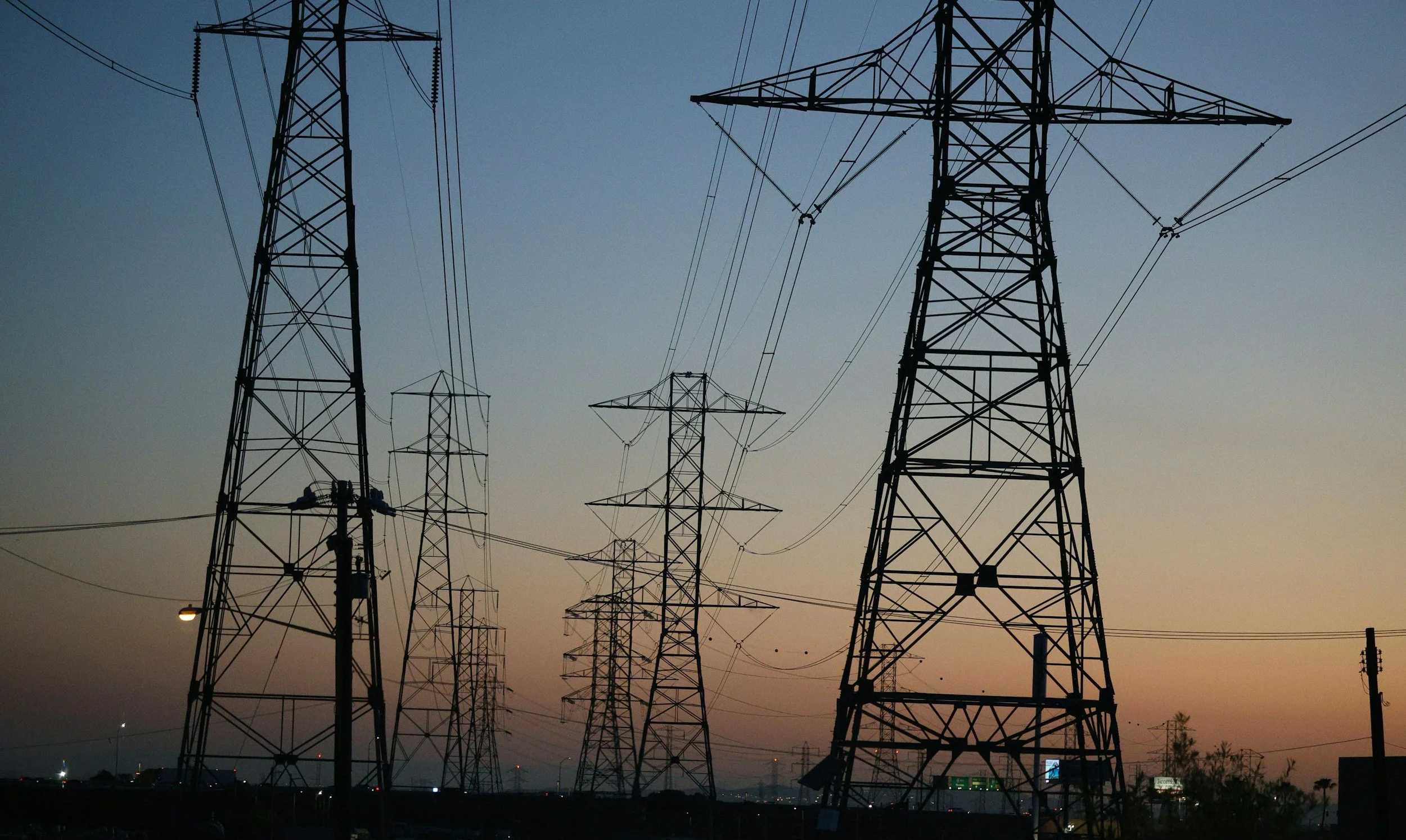
Powering Relief: How New Jersey Communities Are Addressing the Energy Affordability Crisis

New Jersey households are experiencing some of the sharpest electricity cost increases in years. In 2025, bills rose nearly 20%, adding $250–$350 to many New Jersey families’ annual electricity bill. This increase stems from several factors: an aging power grid, demand growth from AI data centers, fuel price volatility, and weather driven grid stress.

The war in Iran is now shocking global oil and natural gas markets driving gas and electricity prices even higher.

Residents feel powerless: they can’t influence global fuel markets or infrastructure decisions. But municipalities can step in with a solution that delivers immediate savings and addresses the underlying cause of rising costs.


What’s Driving the Crisis

Surge in Data Center Demand

Artificial intelligence and cloud services are fueling a rapid buildout of large, round‑the‑clock data centers. These facilities already use 5% of U.S. electricity, with federal projections showing consumption could more than double by 2028.
PJM, New Jersey’s grid operator, warns that most projected load growth through 2030 now comes from data centers, contributing to rate spikes statewide. New large data centers, like those in Vineland and Kenilworth, helped drive the rate jump in 2025.


Supply Lag: A National and New Jersey Problem

Across the U.S., data centers are coming online faster than new power plants can be built and interconnected, leaving grids struggling to keep up with soaring demand.

New Jersey faces the same challenge: PJM reports project backlogs, delayed generation additions, and generator retirements are tightening supply, contributing to price spikes and raising long‑term reliability concerns.


Market Forces Outside Residents’ Control

A large portion of New Jersey electric bills reflects wholesale supply and grid capacity charges—costs that fluctuate due to regional market conditions, not household consumption.

Community-Scale Resources Are the Scalable, Cost‑Lowering Alternative

As demand surges and supply lags, everyone pays more. However, the market is adapting to crisis conditions, and New Jersey municipalities are now key drivers of grid modernization and consumer protections.

The U.S. is adding new power capacity primarily from clean energy because it is cheaper and faster to build than fossil generation. In 2025, 90% of all new national electricity capacity came from renewable sources. And nearly all new generation added to the grid in New Jersey in the past five years has been solar. New fossil fuel generation is simply too expensive, takes too long to permit and build, and relies on volatile fuel markets.

Renewable generation helps stabilize bills by reducing exposure to fossil fuel prices and relieving pressure during peak demand – when electricity is most expensive.


New Jersey’s Answer: Community Solar

New Jersey has established one of the strongest Community Solar programs in the country. It provides bill credit discounts for participants, prioritizing low‑ and moderate‑income (LMI) customers. Savings are guaranteed and appear directly on residents’ normal utility bill.

Unlike conventional large-scale wholesale power generation, Community Solar farms are built on available rooftops and brownfields, each serving hundreds of local utility customers through a subscription model. Community Solar requires no rooftop installation and is accessible to renters, seniors, and residents of multifamily buildings. More than 50 community solar projects have already been installed in PSE&G, with more than 225 in the development pipeline set to be built in the next two years.

A Transformative, Inclusive Affordability Tool

As of 2025, the Board of Public Utilities has authorized New Jersey municipalities to directly address energy affordability by broadening access to solar savings through municipal automatic enrollment (MAE) in Community Solar. Municipalities designate eligible groups of residents, such as neighborhoods or multifamily buildings, to automatically receive on-bill solar credits that lower their utility costs. At least 80% of the selected group will be low- to moderate-income (LMI), ensuring savings reach the households most burdened by high energy costs. Residents receive advance notice and can opt out or cancel anytime with no penalty.  

MAE transforms Community Solar into a broad, inclusive affordability tool that focuses value in your community. With seamless on‑bill credits and guaranteed discounts, households experience immediate relief.

Many New Jersey municipalities, including Hoboken, Princeton, Camden, Highland Park, Manchester, Collingswood, and others are in the process of establishing a MAE Community Solar program.

Glenn Weinberg, Vice President, at Joule Community Power, which launched the country’s first MAE Community Solar program in 2021, emphasizes just how transformative this model can be for New Jersey communities. He calls it “the most impactful step municipal leaders can take to address energy affordability,” noting: “It’s exceedingly rare to see a program that so directly addresses residents’ energy cost‑burdens and simultaneously accelerates the much-needed development of new generation resources.”

Sustainable Jersey’s 2025 Municipal Community Solar Automatic Enrollment Guide provides a clear, step‑by‑step blueprint for towns to adopt the program without administrative strain.

Why MAE Community Solar is the Right Solution Now


Immediate Relief

Community Solar reduces monthly bills through guaranteed credits on utility statements.

Long‑Term Stability

Expanding solar generation reduces the cost pressures caused by rising data‑center load and volatile fossil fuel markets.

Equity

MAE prioritizes LMI households and reaches residents who otherwise may never sign up.

A Ready‑to‑Use Program

The policy framework, billing systems, and guidance materials are already in place; municipalities simply need to take advantage of available tools.


Take the First Step

New Jersey’s energy affordability crisis is being driven by massive structural forces—wholesale market costs and soaring data‑center energy demand—that residents cannot control. But municipalities can deliver meaningful relief.

Automatic enrollment in Community Solar is the most powerful, immediately available tool New Jersey offers to protect households from rising energy bills.

By embracing MAE now, municipal leaders can lower costs for residents, support clean energy growth, and shield their communities from the next wave of market and data‑center‑driven price increases.

Reach out to Joule Community Power at gweinberg@jouleassets.com to schedule a meeting for your municipality to learn more about MAE Community Solar and how to get started.


About Joule Community Power

Joule Community Power helps communities and consumers lower their energy costs. We specialize in consumer protective tools that reduce bills, stabilize rates, and expand access for consumers historically left out of energy markets. Joule empowers households, businesses, and municipalities to benefit from the same market leverage typically reserved for large corporations.

Joule scales practical solutions that address the energy affordability crisis at its source. We work alongside municipal and state governments, corporations, and community stakeholders to unlock capital for project development, energy efficiency and grid resilience. The result a cleaner, more just energy system, where cost savings, reliability, and long-term stability are accessible to all.

Navigating Public Solar:​ Unlock federal funds and achieve your community’s climate goals​

Contract with new clean energy infrastructure, access newly available federal funding, AND KEEP the benefits within your community ​

Municipalities and other not-for-profit organizations interested in contracting with regional projects and/or utilizing their land and buildings for new renewable energy and storage projects, have mainly been able to do so to-date, by leasing out their property to project developers or by investing in their own solar panels. While this helps communities bring in a small amount of income or reduce costs over time, it often does not give communities control over how the projects are developed, who benefits from the projects and how. The Inflation Reduction Act (IRA) that was passed into law August 2022 by the Biden administration changes this dynamic, enabling communities to access direct payments either for themselves and/or their low- to moderate-income residents, through contracting with local solar or storage.​

The IRA directs nearly $400 billion in federal funding to clean energy projects in an effort to lower carbon emissions. The Act opens the opportunity for local actors to benefit directly by contracting with projects, and makes federal funds available to tax-exempt organizations like municipalities to help offset their project costs – should they decide to develop themselves. ​

The important change the IRA brings to municipalities is that the Act changes who can access investment tax credits (ITC). These credits have previously been available only to organizations with significant tax liability. Now, tax-exempt organizations including local governments and NGOs can also benefit from federal funds for supporting and contracting clean energy infrastructure, opening new opportunities for project development and income streams.​

The funds can be accessed through a new direct pay option that enables tax-exempt organizations to receive a refund from the IRS for tax credits on projects placed in service after 2022. This refund is approximately 30% of the total project value with additional bonuses that can stack the ITC value to reach 40-70%. In particular, support is enabled for projects benefiting low to moderate income residents.​

Joule Community Power provides you with the tools needed to navigate and act on the opportunity to contract with or develop local projects, take advantage of nearby projects, and maximize community benefit, including for your low- to moderate-income residents. Learn more or contact us.

Additional Resources

Information on the Investment Tax Credits for renewable energy credits from the EPA and the guide to solar ITC:​

Saving Green While Going Green

Clarkstown protects residents from high energy costs by taking climate action


“Even though energy rates are the highest they’ve been since the 1980's, we have been able to save our residents money and give them predictability through a fixed electricity rate, and that’s been extraordinarily helpful for our residents.”

Clarkstown Supervisor, George Hoehmann describes how one of the municipality’s ongoing climate initiatives—a local clean energy community choice program called Rockland Community Power—has allowed local leaders to protect residents from a dramatic upward swing of energy prices by securing a lower, fixed electricity rate.

As a result, Rockland Community Power participants have saved more than $5.5 million dollars since the program launched in November 2020. Clarkstown residents have saved more than $2.7 million so far, and the program has also enabled the vast majority of households to switch over to 100% renewable electricity.


Supervisor Hoehmann continues to have ambitious objectives for his community.

“Our goal is to take Clarkstown operations off the grid. To do that, we’d need to build out another roughly 2 Mgw of solar or renewables; but the goal is to be the first town in all of NY State to be net neutral in energy usage.”

Clarkstown milestones:

  • First municipality in NY State to build a solar field on a closed landfill (2014)

  • Early adopter of LED streetlights (2016)—Clarkstown was, as Supervisor Hoehmann says of this project, ”the first on this side of the Hudson River, between New Jersey and Albany”, to install LED streetlights, saving the Town ~$ 1 million/year while drastically reducing energy consumption

Upcoming Town Projects:

  • Solar power for municipal buildings

  • Charging stations for electrical vehicles and solar carports by the Town Hall and at a local park

Supervisor Hoehmann explained, “Beyond the immediate cost saving benefits and reduced carbon emissions, the clean energy program, has also helped the town access State funding for future projects.” He continued, “The CCA really helped us attain designation as a Clean Energy Community, thereby qualifying us for and opening access to grants for charging stations and other projects. These projects will, in turn, give us more points in NYSERDA’s ranking system and qualify us for even larger grants.”

Final thoughts...

Being at the forefront of local climate action efforts is a familiar realm to Supervisor Hoehmann. Even before becoming Clarkstown’s Supervisor in 2016, he brought solar to a number of agencies. In his earlier role as CEO and administrator of Camp Venture (a nonprofit provider of support and services for people of all abilities, ages, and special needs) Hoehmann was the first in NY State to install solar on a group home. "I really believe that where there's a will, there's a way," said Hoehmann as our interview wrapped up; and he does, in fact, seem to embody the adage.

Joule serves as program administrator for Rockland Community Power, Clarkstown’s local clean energy community choice program.

We Are Still In: Community Energy from Disruption

We Are Still In: Community Energy from Disruption

Less than a month after the largest global mobilization of climate strikes, the number of voices advocating decarbonization from Sydney to Berlin and Istanbul to Cape Town, is undeniable. The transition represents more than a changing technical system but changing social behaviors, business models, institutional frameworks and political choice. The new and increasingly relevant descriptor of the evolving energy market is disruption

Marbletown Supervisor Excited About Community Solar

Marbletown Supervisor Excited About Community Solar

Fifteen Marbletown leaders and influencers joined Town Supervisor Rich Parete, Council Member and Environmental Conservation Commission Chair Tom Konrad, and the Hudson Valley Community Power (HVCP) team at the Rondout Community Center on September 24th.

Hudson Valley Community Power is a Go

Hudson Valley Community Power is a Go

As of April 3rd, 2018, the six communities that have been exploring the program have now officially signed onto to proceed with the Hudson Valley Community Power program. The partner communities now include: Beacon, Cold Spring, the Town of Fishkill, Marbletown, Philipstown, and the City of Poughkeepsie.

RFP is a Historic Win for Joule and an Opportunity for Poughkeepsie

RFP is a Historic Win for Joule and an Opportunity for Poughkeepsie

The City of Poughkeepsie sees Community Choice Aggregation as an opportunity to make an impact by mitigating climate change. As Poughkeepsie City Council Member Sarah Salem said, “CCA is one of the most effective tools for municipalities to remove themselves from the dirty fuel mix.”

Changing the Way We Think About Energy: Bringing Local Energy Choice to the Hudson Valley

Changing the Way We Think About Energy: Bringing Local Energy Choice to the Hudson Valley

When we think of environmentalism, we often imagine the activist: someone devoting her life to pollution control or working tirelessly on an advocacy campaign.